
.jpeg)
.jpeg)
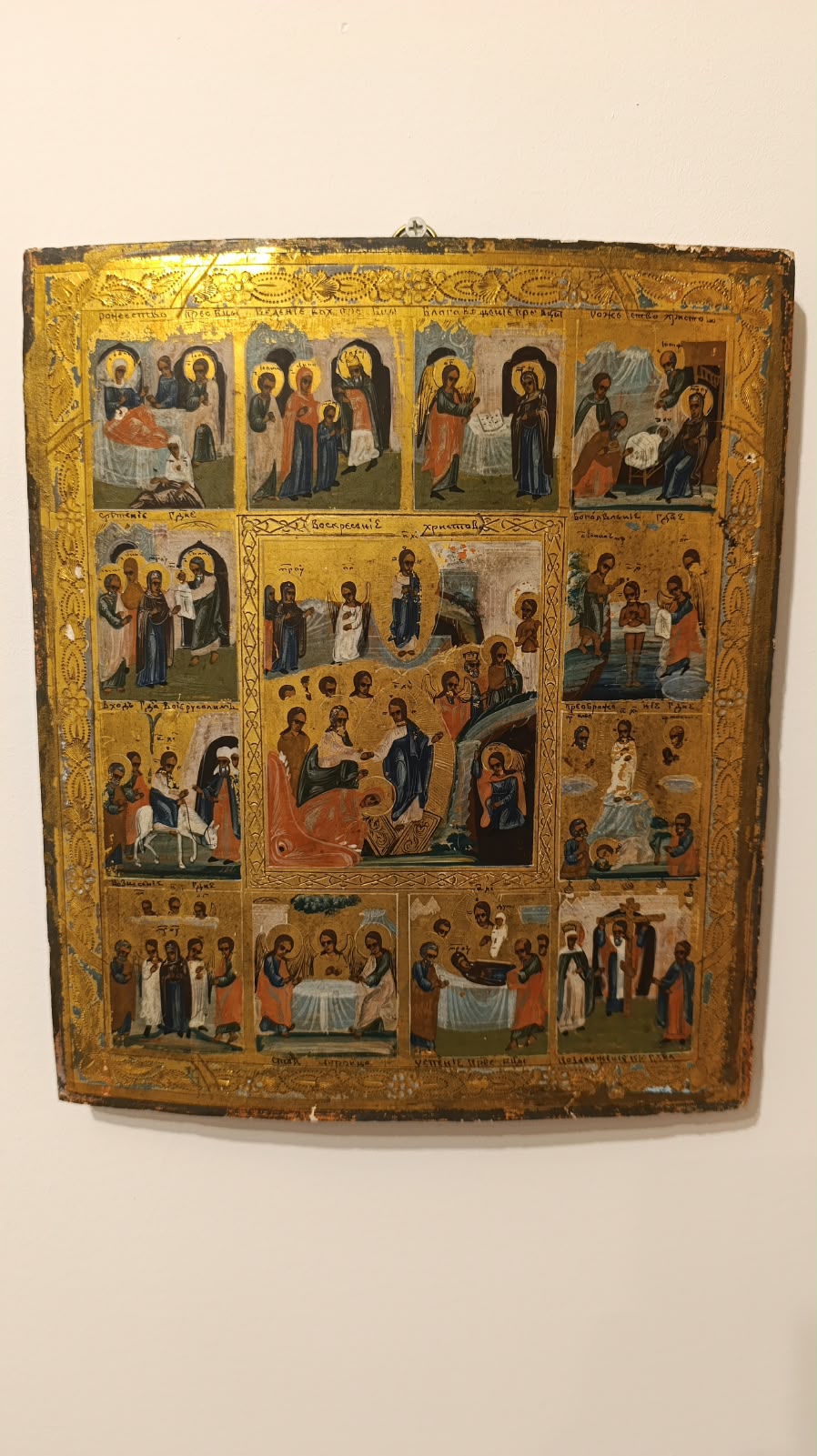
Multi-panel narrative icon · Saints and sacred scenes in separate fields
How to read a multi-panel icon
Divided fields allow several moments, saints or feast scenes to coexist. Borders establish a rhythm while repeated gestures and architectural settings guide the eye. The result is less a single scene than a compact world of sacred history, where the viewer can move from one encounter to the next without leaving the wooden support.
Georgia’s local and connected traditions
Georgia has always been connected to wider Orthodox image cultures through pilgrimage, trade, monastic exchange and changing imperial borders. The fresco programmes of Gelati and Vardzia, the painted churches of Svaneti and the sacred architecture of Mtskheta show how Georgian artists made inherited Christian subjects their own through colour, scale and place. This multi-panel icon is not currently assigned to a Georgian school. Its significance in Tbilisi lies in the questions it raises: how images travelled, how saints were remembered across languages, and how a collection can bring Russian, Georgian and wider Orthodox histories into one close conversation.
Registers, compartments and sacred history
Multi-panel icons are best approached as structured theological programmes. Their borders are not merely framing devices: they separate liturgical episodes, establish hierarchy and allow the viewer to move between saints, feasts and narrative moments. Repetition creates coherence. A familiar frontal saint can stabilise a more complex story, while an architectural setting locates a miracle within sacred history rather than ordinary geography. This format belongs to a long Orthodox practice of visual encyclopaedia, from manuscript illumination and church fresco to portable panels. The icon is not a book translated into pictures, but it shares with theological writing an interest in typology, sequence and memory. The precise subjects in this work require further study of inscriptions and details.
Evidence and attribution
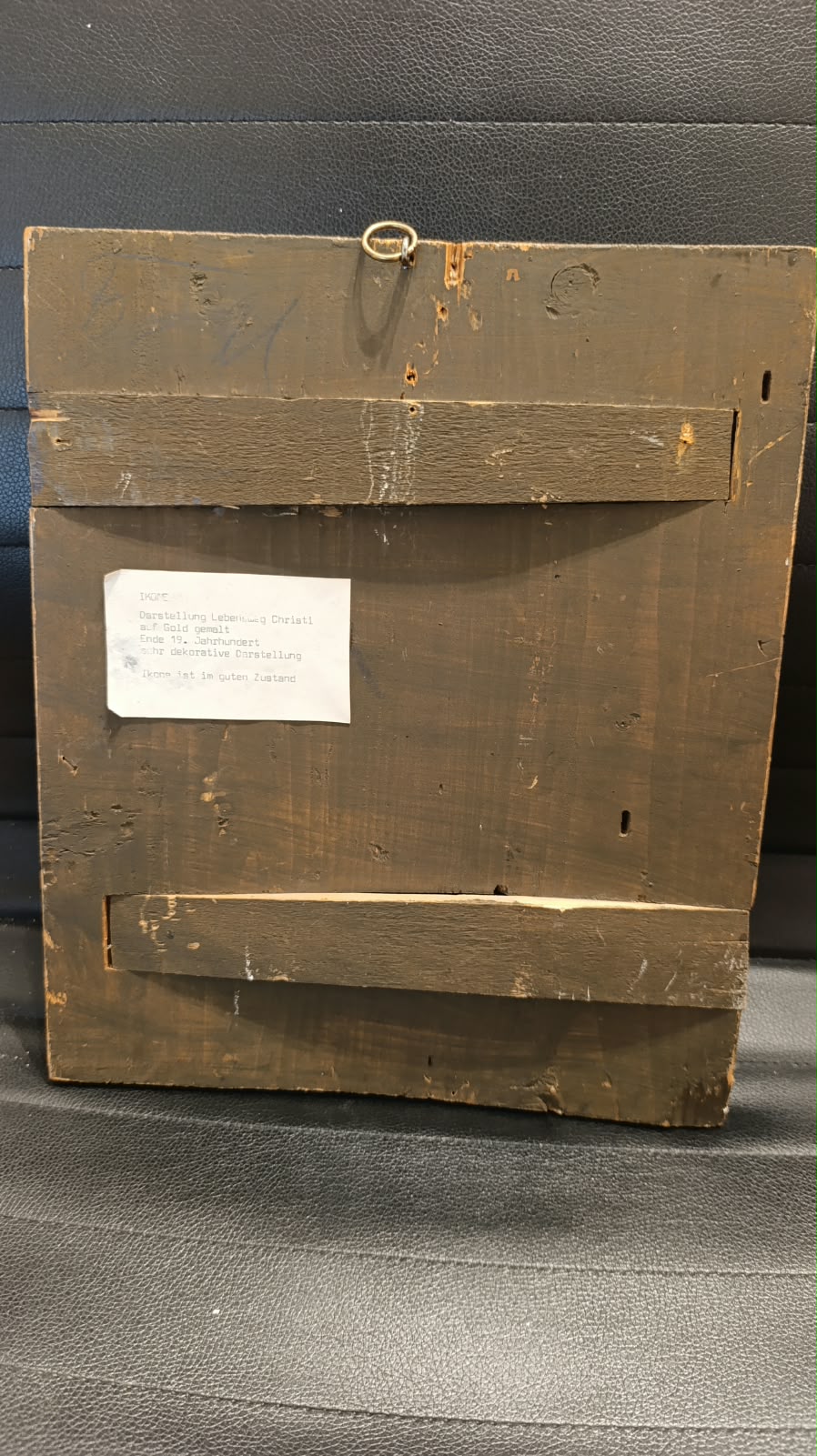
The photographs support classification as a multi-panel narrative icon. The individual subjects, school and place of production require confirmation from inscriptions and close examination. The catalogued medium is tempera and gold on wood, with visible wear and losses. A complete record should include panel dimensions, construction, ground, pigments, gilding, inscriptions, condition mapping and provenance.
Comparison with Georgian manuscript and fresco programmes clarifies why the multi-panel format should be read structurally. Georgian artists often arranged sacred narratives in relation to a church’s architecture, feast calendar and patronage, while Russian icon workshops produced portable cycles for church and household use. Both traditions depend on repeated types and recognisable sequences. The collection panel can be examined within that wider Orthodox history through its divisions, scale and subjects, without treating the comparison as evidence of Georgian manufacture.